





















IMF says it did not assess budget execution during mission to Cape Verde following statements by Prime Minister.
The International Monetary Fund (IMF) clarified on Friday that it did not assess Cape Verde's budget execution during its technical visit to the country, as it had not received data for that purpose, after the Prime Minister stated that the mission had identified a "surge" in spending.
"As a rule, the IMF does not comment on internal political matters. The team that visited Cape Verde between July 21 and 24 was on a technical visit, not a program review mission," a spokesperson for the institution told Lusa.
"Although the main points of the revised budget were discussed with the authorities, no data on budget execution was provided, and therefore they were not in a position to assess the claims regarding the implementation of the 2026 budget or the need for a revised budget," he added.
The IMF spokesperson concluded that "the IMF did not assess these issues during the visit."
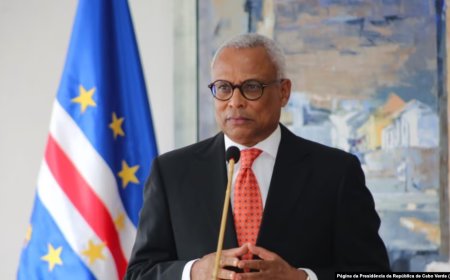
On Wednesday, during the presentation of the Amending Budget proposal, Prime Minister Francisco Carvalho, when questioned about the recent IMF mission to the country, described the visit as "excellent" and stated that it allowed them to identify a difference between the budget approved for 2026 and the projected budget execution.
"It was precisely this mission that allowed us to identify this difference, because during the visit we analyzed the accounts in depth and compared the budget approved for 2026 with the budget execution in June," he said.
According to the head of government, this difference resulted from spending exceeding the forecast by approximately eight billion escudos (72.6 million euros), and he accused the previous government of the Movement for Democracy (MpD) of having "deceived" the IMF.
This Friday, during the State of the Nation debate, the Prime Minister reiterated his accusations against the previous government.
"The IMF was deceived by the MpD government, which manipulated the accounts, let that be clear. IMF technicians come here to analyze the data, but when the government is irresponsible and hides the accounts, it is clear that they will analyze the value that was presented," he declared.
The parliamentary leader of the MpD party, Luís Carlos Silva, considered the accusation that the previous government had "deceived" the IMF to be "very serious" and "false".
"It is irresponsible and deeply damaging to national interests. The Prime Minister confused legal mechanisms for budget execution with illicit practices, or chose to deliberately distort these mechanisms to support a political narrative," he stated.
Luís Carlos Silva argued that the Prime Minister's statements also damage the credibility of the Cape Verdean state with international partners, investors, and creditors.
"A country's credibility is built over years, through solid institutions, transparent accounts, and honored commitments. Cape Verde has never missed a single payment on its external debt. This is a legacy that has been handed down to it and that it will have to protect," he said.
According to Francisco Carvalho, the State Budget for 2026, approved by the previous MpD government and promulgated by the President of the Republic, José Maria Neves, in December 2025, projected an expenditure of 95,675 million escudos (868 million euros).
When the current government took office in June, following the victory of the African Party for the Independence of Cape Verde (PAICV) in the legislative elections of May 17, the projected budget execution amounted to 104,011 million escudos (943 million euros), according to data presented by the Prime Minister.
The IMF technical mission took place between July 21 and 24 and aimed to establish initial contacts with the new Cape Verdean government.
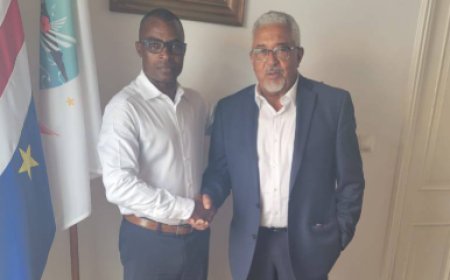
At the end of the visit, the IMF's executive director for Cape Verde, André Roncaglia, expressed "greater hope and confidence" in the continuation of cooperation with the country and in the commitment of the Cape Verdean authorities to macroeconomic stability and ongoing reforms.